Recruitment and skills are key issues for the whole UK economy. A 2024 report by the Open University, in partnership with the British Chambers of Commerce, found 62 per cent of organisations were facing skills shortages.
Lancashire has a range of both public and private sector skills programmes and support services to help businesses, and with changing workplace practices such as flexible and hybrid working, the evolving needs of young people and the rising demand for new skills such as AI, the county’s support landscape is continually evolving.
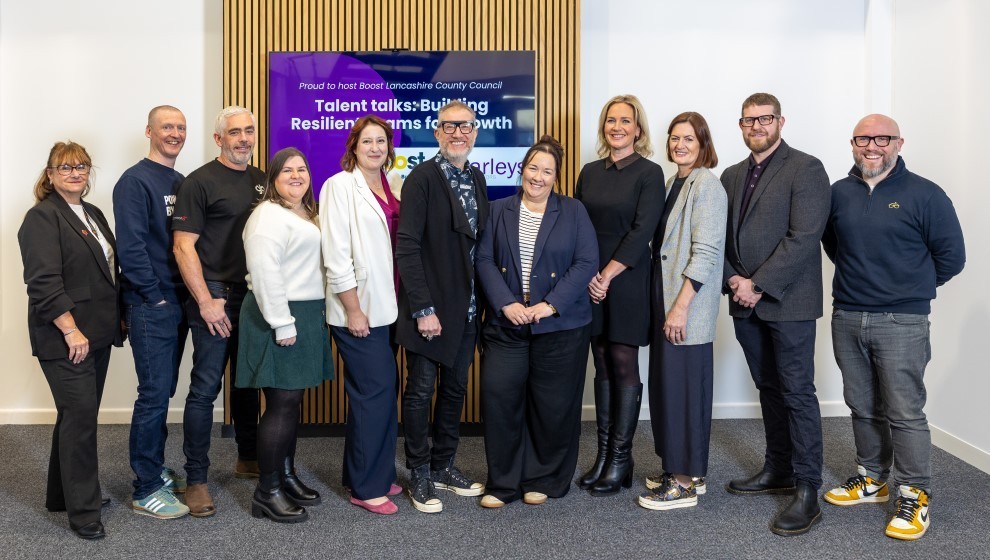
Boost; Lancashire’s Business Growth gathered a range of businesses and Lancashire support partners at Farley Solicitors in Burnley for a special roundtable debate around the key challenges and solutions.
This is the second instalment in Boost’s roundtable series on key issues for Lancashire businesses. Our first roundtable, on accessing finance, can be viewed here.
What are the key current skills gaps for Lancashire businesses?
Sophie Addison, group marketing and ESG director, Addison Engineering
We’ve got several sites across the North. Our Middlesbrough and Daresbury offices have a strong pool of local skills, but we find there is a shortage of engineering skills coming into the industry in Lancashire.
Our head office is at Hillhouse Business Park in Thornton Cleveleys and there is real competition locally for technical roles which creates further challenges.
Scott Earing, group managing director, GB Integrated Systems
We resonate with that. I started the business at 35 and moved it to Colne, where I live. The talent pool is not there in our local area, which means we have to train in-house. The engineering side is the biggest problem because when our engineers get to a certain level of experience, bigger companies try to take them from us.
Reta Rose, partner – head of operations, Farleys
There are so many young people in the North West wanting to get into law. Farleys has an excellent record of bringing through legal talent, but an issue is that younger staff are tempted by the bright lights of Manchester and other areas. We are investing so much time into training through solicitors’ apprenticeships and other schemes, but we can lose them after two to three years.
The other issue is succession planning and understanding who the leadership team of the firm will be in the years to come.
Richard Few, founder, Sales Geek
Sales education is chronically under-represented across the UK economy. All of our staff have fallen into sales during their career – we do not prepare people for a career in sales. However, the burden is on the industry to transfer what we have learned to the next generation and it’s not just technical skills, it’s soft skills and life skills. I think that’s where the biggest skills gaps are in the next generation.
Sara Gaskell, strategic partnership manager, Lancashire Skills and Employment Hub
Working in partnership the Lancashire Local Skills Improvement Plan (LSIP), the Lancashire Skills and Employment Hub and the Lancashire Careers Hub developed a resource following employer feedback on their expectations for young starters to their organisation. Quite often, it is softer skills that are the key priorities – it may be just a language issue.
A new resource has been developed to support businesses with these skills. Currently, there are 192,000 people in Lancashire who are in the ‘inactive’ group with approximately 60 per cent of those wanting to work. We are working with projects like Connect to Work to support businesses with the retention of their employees and to stop people coming out of work and to help them back into the world of work is key.
Claire Brockbank, head of HR, Cube HR
Communication is a dying art. Those connection skills between employees and with managers are vital, and some of those skills have been lost since working life has become increasingly remote following the pandemic. We should be able to have honest conversations with people, for example if there is an issue or a challenge they are facing, but it seems like many businesses can’t.
What role does a company’s culture and values play in supporting growth?
Richard Few
For me, employer proposition is really important. The problem is having a group of people with different needs and trying to solve that with one solution - we always try and be clear with people about what that is and what we stand for.
I was at a BCorp event recently and it’s inspiring to speak to so many business leaders who genuinely care about their people. The challenge of integrating a new generation has always been there but there are so many businesses in Lancashire who are doing it brilliantly, building trust by listening to what younger members of their team want to see.
Ellie Smith, operational director, Anthem Engagement
There is a disparity between older and younger generations and their outlook about work and careers. We see a lot of young people go into businesses nowadays who think they will see immediate and rapid growth and that can cause tensions with senior team members.
Supporting wellbeing is a big factor in culture and businesses that invest in wellbeing support often do well. They have people wanting to join the businesses and those recruitment and retention issues become easier.
Dave Scholes, founder, Six Connections
We have a lot of discussions with businesses where members of staff have joined and there is a clash of cultures or a lack of understanding between generations. Conversations are vital in these situations and it’s important that people create conversations within a business to find alignment.
Those important conversations are often also not happening when members of staff are struggling either in their professional or personal lives – for me being open and able to discuss this with colleagues should be key to a company’s culture.
Cheryle Britton, founder, YOLO Wellbeing
In many of the organisations we work with, we see that middle managers are often under significant pressure, sitting between senior leadership expectations and the needs of their teams. When they don’t receive the right support or development as they move into more senior roles, stress can build and ripple through the wider culture. Understanding what stress looks like is key, because when managers are stretched, it’s more likely their teams will be too — and the organisation won’t be getting the best out of its people.
Investing in wellbeing initiatives can help ease these pressures and, in turn, improve productivity. This doesn’t have to mean a large budget; it can start with identifying the areas of the organisation that need the most care and attention. When people know their organisation genuinely cares about their wellbeing, trust grows, difficult conversations become easier, and teams are better able to perform at their best.
David Dunwell, CEO, Lancashire Mind
We have spoken a lot about adapting to the needs of a younger generation. Generation Z are increasingly focused on values so being a values-driven company with a strong culture is a real differentiator.
Investing in wellbeing initiatives also provides a brilliant return on investment, not just for younger staff but across the workforce. Figures show that for every £1 invested in wellbeing initiatives, organisations get a return of £5.10 in productivity gains, retention and other areas.
What support is available to help with recruitment and skills issues in Lancashire and what would you like to see?
Claire Brockbank
I do think mentalities are shifting and people are recognising the importance of soft skills. We have seen an increase in people interested in working with us through training and other services, particularly to support their managers. The big issue is not cost, it is time cost. If you have a business with ten people, and two people take time out of the business, it is difficult to manage.
Dave Scholes
I agree. Much of our training is designed to be delivered over a certain period of time but we are finding that people want a three-hour training session and then to be finished because they are struggling to take time away from the business – so we are adapting our services to align.
Sophie Addison
New technologies like low carbon and other new innovative sectors will be a real contributing factor in Lancashire’s future economic growth and we need that pipeline of skills.
Addison is in the process of developing a training centre and innovation space. We’re working with Wyre Council on funding and we’re liaising with a wide range of local companies to ensure they have access to the same training. I’m hoping initiatives like that will become more popular in Lancashire so we can start to build stronger links between industry and our schools and colleges.
Scott Earing
Businesses are stronger together and I have been liaising with representatives in Pendle about a business directory. We should know every business in the local area and my hope is that we can join the dots and work more collaboratively to solve the issues we face.
Sara Gaskell
Upskilling in the workplace is an important element to helping Lancashire's businesses succeed. Many businesses ask for management and team leading support. Companies promote people because they are good at their jobs, but often do not give them the skills for their new role. One way to do this is through programme like Skills Bootcamps.
There are a number of programmes which are funded to develop people’s skills at all levels of an organisation, we do need businesses to tell us their challenges so we can review and inform future programmes to support with these. T Levels are a great option to help bring younger people through and figures show that a high percentage of young people get a role in a business or organisation that has offered them a T Level.
Andrew Leeming, programme manager, Boost
Everyone in business needs to lead with passion. It’s clear that we are all passionate about solving the skills and recruitment challenges in Lancashire and that there are solutions to these. The problem is resource and that business leaders are often time poor.
Having a single access point to start these conversations in Lancashire can help, and as Lancashire’s Business Growth Hub, Boost is not only a conversation starter but a convener for both the public and private sector to address the issues in Lancashire’s economy.
We invite all businesses with a skills issue, or those wishing to help find solutions to the challenges we’ve discussed today, to speak to Boost as the starting point.
Find out about the skills programmes and support currently available in Lancashire by visiting the People and Skills page of the Boost support directory or get in contact with the Boost team directly via the Boost Helpdesk.




The website uses cookies.
Some are used for statistical purposes and others are set up by third party services. By clicking 'Accept all & close', you accept the use of cookies. For more information on how we use and manage cookies, please read our Cookie Policy.