So you want to save the world? The basics of scaling a social model
If you manage or govern a social purpose organisation, the chances are you’ve thought about how to enhance your impact.
Anyone working in or with the third sector knows how hard it is out there, with charities disappearing every day. Although it may seem counterproductive, when a natural response is to tighten belts and batten down hatches, growth can be a survival strategy.
There is truth in the adage ‘economies of scale’. An organisation with several delivery sites can minimise overhead costs through centralised admin, accounting, fundraising and HR functions. This has definite advantages when applying to funders who cap overhead cost percentages or seek regional or national impact.
But how does scaling work for social purpose organisations?
Essentially, it’s the same as for commercial organisations but with a little added complexity. To grow, you’ve got some basic options: (shamelessly adapted from Ansoff)
- Do more of the same service for the same beneficiary. This is the simplest option, but you might be limited by space or accessibility for beneficiaries. This raises questions of capacity and location.
- Do more of the same service for new beneficiaries. So you’re probably staying in the same location, but maybe expanding your delivery to a new type of beneficiary – a classic example is adding a children’s service to an existing adult service.
- Do something different for your existing beneficiaries. It may be that you’ve identified significant impact for your existing clients through a new kind of service or you want to offer your existing service in an additional location.
- Do something different for different beneficiaries. You’d probably only do this if you love chaos, or you’ve really got your back to the wall. The Charity Commission might have something to say about it too!
Once you’ve decided how you would like to grow, then think about the model that fits best.
- Deliver it yourself. Have you got the capacity? What do your staff think about this? Do you need finance? Social Investment Business and UnLtd could be very helpful in this instance.
- Encourage others to use your model (if you can prove it works). You can do this in several increasingly involved ways.
- Offer consultancy support for other organisations to help them support your beneficiaries
- Do you have products or services that could be licensed? What’s your intellectual capital? There’s surprisingly accessible advice available from the Patents Office which is worth checking out.
- Do you want to franchise your model? The million-dollar question eh? Put simply, this might be a goer if you are confident that your social model is not dependent on individuals or location. The School for Social Entrepreneurs offers excellent training on social replication if you think this is a viable option for growth.
So, in summary, don’t write growth off, or put it on a shelf for a less rainy day. The world needs saving, and in the words of Douglas Adams: “let's think the unthinkable, let's do the undoable. Let us prepare to grapple with the ineffable itself and see if we may not eff it after all.”
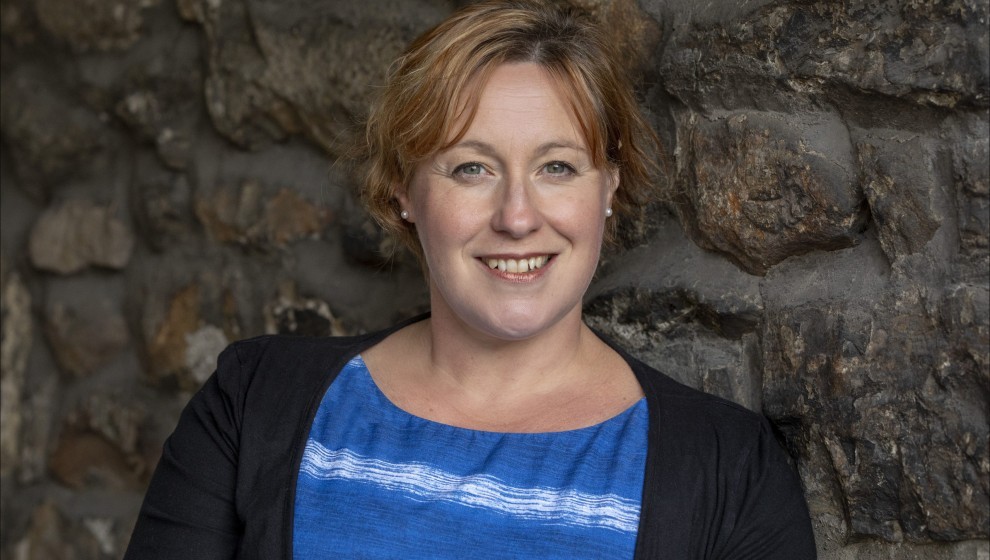
The Shared Value Business helps companies to improve areas of their businesses including corporate social responsibility and social value. Managing director Claire Louise Chapman has worked at senior level in the charity and corporate responsibility sectors.